
Outer Wilds Hot Shot and YouTube Achievements
Apologies in advance that this post is a bit of a ride. I’m not sure who the audience is, but that’s never stopped me before.
Yesterday I uploaded a video I made by recording my attempt to complete an achievement in the video game Outer Wilds. Stick around for my description/plug for this game later in this post. The achievement is called Hot Shot, and to receive the achievement you have to fly to a place that is very close to the Sun and enter a structure.
Click for contextual info with extremely minor spoilers
You fly to the Sun Station, a location that is very important later in the game, but is largely a mystery early in the game.
This is one of the most difficult achievements in the game because of the complexity of coordinating your velocity components in at least three dimensions with no computer assist under changing gravitational conditions. For the purposes of completing the game, this is absolutely unnecessary. The game creators knew people might want to try this, so they created an achievement trophy to mark that you had done it.
I spent about a day and a half of trying to complete this achievement. Over 70 attempts. And that’s after I tried a number of times less seriously in the many hours we played the game before completing the main story arc. I did watch a couple of YouTube videos that tried to explain what you could do to make the achievement easier, but while they made the achievement look easy, the useful advice was minimal1. But after so many attempts, and Kit’s patient encouragement, we pushed through and did it. You can watch the 3.5 minute video above, to which I’ve added a soundtrack from the YouTube free music library of a Grieg piece I’ve known since music teachers introduced us to it in elementary school. The video may contain mild spoilers.
Why?
Why do this? Good question. Why do anything? If that seems like a cop out answer, it is. But people only ever ask the question when they already think what you’re doing is a waste of time. People rarely ask why you ate breakfast. Or tied your shoes. They didn’t fail to ask because they knew why you did those thing; they failed to ask because they knew why you did those things and didn’t think they were a waste of time. People do know why other people play video games: it’s for entertainment. What they’re really asking is “why do you find that entertaining, when I think it might be a waste of time?”
Cooper, This is no time for caution
One thing I like about the Hot Shot achievement highlights a reason that there is heavy overlap between fans of Outer Wilds and fans of the Christopher Nolan film Interstellar.
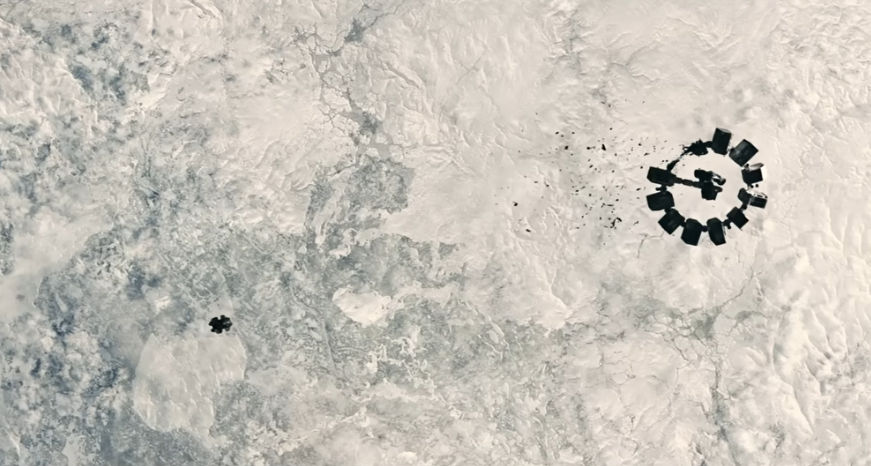
There is a scene in Interstellar that features a risky docking operation. If you haven’t seen Interstellar, please see it. It isn’t a perfect film, but it’s got action, and drama, and mind-bending science fiction. It will make you cry if you have a pulse. Fans of Outer Wilds have likened the Hot Shot achievement to that scene in Interstellar where Cooper is trying to perform a dangerous docking maneuver to save his crew. A robot named CASE (or TARS; I can’t tell which one because they have the same voice actor) urges the main character on once he has decided on the improbable and inadvisable course of action. “Cooper, this is no time for caution.” Cooper - now that you’re committed, you have to act.2 That moment in the movie is sort of a clarifying moment that represents several types of experiences, but also the dangers of hesitation. There is something really powerful and freeing in being committed and having to act. But it’s scary (and exhausting) getting to that point and sometimes it’s still frightening to embrace your one chance. We say the bigger mistake is never getting to that point because the fear we feel is in the slipping up. Watch the docking scene from Interstellar again here. Unless you haven’t seen the movie. In which case – see the movie!
I used to love playing poker, which was something I did in person and online, with friends and strangers. No matter whether it was a good poker game or an unlucky one, the play was characterized by a kind of compartmentalized experience of each hand. Every hand was and is a new hand. While sometimes you kept track of cards that were played out during a hand (in a game like seven card stud), and you kept track of the tendencies of your opponents, you could forget whatever happened in the last hand and focus on the current one. And you did this over and over again. That is a kind of freedom: a freedom from the past, a freedom from past errors, a freedom to improve, etc. I’m not trying to describe freedom as an abstract concept, but as a feeling.
So, this is why I spent the time and so many tries trying to get the Hot Shot achievement. In contrast to my daily life and my work life which is full of complications and subtleties that are exhausting, this was a sort of focused activity that freed my feelings. Many of my leisure time activities offer me this opportunity to focus on something, to the exclusion of other details, and some of them generate the feeling of excitement present in the Interstellar docking scene. So, trying to complete the challenge put me in a loop of focus and determination, which also brought frustration that I had to overcome. And success brought elation.
What I choose to do in my spare time often seems to fall roughly into two categories. One category is doing practical work. The other category is generating desirable experiences and emotions. Cooking is a two-fer, allowing me to obsess over details but also provide for my family. Like, today I’m trying to make South Shore bar pizza for the first time. I’ll let you know how that goes. Did the family ask for that? No. I’m obsessing over it, and they will decide whether they like it. But the obsessing part is the emotional and entertainment part that brings focus and frustration. Success will bring elation. And the money spent on food will feed my family. And it will be cheaper than a restaurant. Considering that “generating particular emotional experiences” is something I know I spend a good deal of time on, it makes sense to spend some time thinking about it.
Education is Crafting Experiences
If you don’t know, I strongly believe that encouraging meaningful participation is a means to support our students to becoming successful. Here’s an example of a good interaction in a school that involved participation coming up against other motivations:
We have a free enrichment block (some call it a WIN or “what I need” block) once a week where students can sign up to do an elective activity. In my classroom, we play a straightforward tactical board game. The rules aren’t complicated, but we only have about 25 minutes to play. When we have new students joining it can take a while to explain everything and still have time to fit in a game. When freshmen came to my WIN block for the first time, I had to explain the game to the newcomers. I gave them the basic outline of the game and sent them to their seats with a board and pieces, and also some printed rules.
“We wasted our time playing the game without knowing all the rules.”
Halfway through the block, they tidied up and came back with the game set so that I could put it away. I said, “oh - you’ve finished a game?” “Yes,” a student said to me, “it went quickly.” I asked if they had had fun, and they had. While they were standing there, two other students asked me about one of the slightly more complex/detailed rules. The new students were surprised to hear about how this rule worked. I explained to them that this was a rule that gets used a lot in some intense games. “We wasted our time playing the game without knowing all the rules,” one of the students said to me. “Well,” I began, “you said you had fun. Did you?” They admitted that they had enjoyed themselves. “This is how you learn something new. Sometimes you can’t get everything all at once. There’s some time left in the period. Would you like to play again?” They said “yes” and had another game, incorporating the new rule into their understanding.
Learning all the rules before you ever begin is unrealistic in the practical sense and also unrealistic in the sense that “this is not how learning happens in our reality.” You will never get started until you start. Needing everything perfect is a comforting excuse we tell ourselves to make the fearful feeling of hesitation feel logically justified. Do you see some of the value of participation in this brief story? It’s far from the complete picture of participation, but its a picture that can be taken up in a glance. This is significant to me because I am just like that student who lamented not knowing the rule. I am a person who spends a ton of time getting my ducks into a row. And for much of my life, it’s gotten in the way. I do learn a lot by preparing, but I have missed out by not doing more earlier.
These students had an experience that is different than the experience they would have had if I’d spent the entire WIN block giving them every last detail of the rules, and then had sent them home without playing. We have a challenge in education to craft experiences that opportune meaningful participation for as much of the time they are in class as possible. And because students are people, this experience involves emotions, and motivations. School isn’t a leisure activity, but it makes sense to ask “why do I choose this leisure activity with these emotional experiences, when I have such a choice of experiences?” and then ask a similar question for my choices as an educator when my students don’t have a choice. But these choices produce tensions. What if a student gets angry that they didn’t know all the rules and isn’t persuaded that they previously had fun – what if they say they did not have fun now that they know the rules were incomplete? [What if they have learned to modify their description of their experience.] What if a student insists on knowing all the rules first and will not play until they’ve studied everything? [What if they’ve learned to behave that way?] What if a student suspects they can never know all the rules perfectly and knows that they are unlikely to become an expert before they play their first game? [What if they have learned that you only should do things you are good at? What if they have learned some people are just good at things and others will never be?] Yes, people learn erroneous, unproductive things.
I don’t have easy answers to those questions. But they are worth thinking about, and I leave them as an exercise for the reader, for now.
YouTube Participation
This section applies the notions of free time and seeking emotional experiences to my YouTube cooking channel. More specifically, why I don’t update it more often. This section is just a little whiny. I hope it also offers some insights.
I recently saw a video3 of a chef making a Michelin-star-restaurant-level pancake recipe. The pancakes are super fluffy, almost like an adapted version of the viral Japanese pancakes you may have seen. I did a back-of-the-napkin analysis of the types of comments the videos got, putting the comments into some categories. Here’s what I got:
The largest chunk of comments criticized calling the product pancakes. The third-largest category called the method impractical because of the effort (despite the chef saying he often prepared a version of these at home). Together, that was about 40% of the comments on an exotic-looking technique for making unusual pancakes… a video they chose to watch. Many of the comments can be reduced to “these aren’t traditional pancakes” which leaves you puzzled about why they watched the video in the first place, considering that the thumbnail, title, and description made all that clear. Does anyone want to see a video of making the kind of pancakes most people make? From a box?
Approximately 20% of the comments were lewd comments and innuendo related to the chef’s whisking technique. Another 15% were outrage over the chef making an annoyed comment about the producer insisting he whisk by hand because people didn’t have KitchenAid mixers (interpret that as you will; KitchenAid or not, a lot of people I know have ways to whisk egg whites mechanically, not just the ultra-wealthy).
I have not made a cooking video for my channel consistently for a long while. What I realized looking at these comments is why. These comments are what social media engagement looks like. If you want a YouTube cooking channel, this is what you’re trying to get in an engaged audience. About 75% garbage and, if you’re lucky, 25% actually debating the merits of parts of the recipe, plus some appreciation. I’m not saying this is what you’re going to get. I’m saying that this is what you are lucky to get. This is what you’re chasing. This is the low-quality engagement that sustains a channel. I’ve known this a while; the analysis just helped me put numbers to it.
“This is the low-quality engagement that sustains a channel.”
It is a lot of effort to make a cooking video. You have to be confident you’re not going to mess up the recipe and that your enactment of the recipe is an exemplar. You have to clean a kitchen studio space. You have to bar your family from it for an extended period of time. You have to set up lighting, tripods, and C-stands. You have to check the audio. You have to make sure you actually have what you need for the recipe in ingredients. You have to make sure you have all the required equipment at hand. You may have to make sure you have power for the powered devices, including induction surfaces. You have to consider what you’re wearing. You have to have the enthusiasm (or an artificial version of it) to present an engaging video-ready personality. You have to consider what sort of things your viewers might object to (wearing a ring while cooking, being able to see the ingredient amounts or recipe on the screen, the speed of your talking, any context you might need, labels, slogans, whatever). You have to consider your background. Your “mark.” If you’re doing this alone, you have to estimate a bunch of things because you can’t adjust the camera. You have to consider timing, if this is a meal for your family – now you have a hard deadline. You have to leave a mess in the kitchen if you plan to eat the food with your family. You have to leave equipment in your kitchen that needs to be put away. This is just the list of concerns I came up with in about 5 minutes of typing.
It’s a lot.
And that’s before editing and other post-processing (which can be slightly relaxing because at least you’re not working with food that you can mess up, mistakes are fixable, and your only deadlines are self-imposed if you don’t have a producer or a strict schedule).
I have started many videos where I screwed up and decided to focus on dinner instead. It’s not difficult in the same way getting a new recipe right is difficult. It’s difficult in the way juggling a bunch of slightly chaotic variables alone is difficult. I like focus. I don’t like chaos.
But I liked my YouTube channel. The boost I got from working on something with my cousin Bob was the highlight of those experiences. That collaborative feeling never diminished. And I had some appreciative viewers. Like my Mom and my aunt. But from many others, there were mostly critiques. And the critiques (even though they were sometimes well-meaning) might have at least raised the profile of our channel. But for reasons that, even today I cannot fathom, almost none of the desire to react to our videos came back to us through YouTube comments – the one currency that could have raised our videos to new audiences. Instead, some feedback came through the grapevine, through word of mouth, or (maddeningly) on the social media posts promoting the videos. It was as though the video itself had some sort of “DO NOT ENGAGE” sign on it.
Growth was a goal for us. It wasn’t the only or main goal. We often said we’d do the videos for ourselves and our families, and for the fun of it. For a while it was fun just to see my videos up on YouTube, and get a few reactions from family. But sustaining a hobby activity (and a YouTube channel is a hobby until it completely takes over your life and you can monetize it), you need to get some of those emotions that put video production into that category of focus or the elation of creating something. My favorite moments, outside of just collaborating with Bob, were the times I just tried to stretch my creative muscles.
“It was as though the video itself had some sort of “DO NOT ENGAGE” sign on it.”
In the video Risotto Cheat Code, I paired a peppy soundtrack with quick cuts, text commentary (often self-deprecating, regarding my mistakes) and explicit description of the recipe, which is something I’d been criticized for before. It’s well under 5 minutes long, which is horrible for the YouTube algorithm, which would like longer engagement. But good in the sense that it’s more likely that people will make it to the end and not fall prey to short attention span clicking. Most people watching a video aren’t there because they want to make the recipe; it’s entertainment, after all.
I did get one appreciative comment, in addition to Bob’s comment. Out of 177 views, the video got six thumbs up (likes). On a channel with over 800 subscribers. In practical terms, this video was a complete failure. The feedback I got (not through comments, mind you) was that neither Bob nor I were actually in the video. I don’t fault people for their preferences, but at this point it might be plain to see why there is a feeling of not being able to win. Though I did enjoy the little video game I created to go along with the “cheat code” theme of the cooking video, mainly created to delight my cousin because of our shared history of gaming and thinking about game development.
That video was four years ago. I’ve done a couple since. Two years ago I made a version of the spaghetti dish from The Bear. The comments are from my cousin and aunt. Some other comments came on social media, but they were, in the balance, neither uplifting nor appreciative. I did show my face at the beginning and end, so I guess I made a concession there. A year ago, believe it or not, I made a stir fry video.
I have some fans. I wish I could say it were worth the effort to make more videos. I think the level of enjoyment I get out of the experience might actually put me over the top IF I had a dedicated place to film, and could involve others without masking, and had a cameraman, and maybe even a producer. But, as a hobby, it will keep going like this: every year or two I’ll think of something I am motivated to make a video about, and I’ll have forgotten about the hassle. And I’ll go back and kick that football.
Every activity you choose to engage in is pushing aside some other activity with its own set of feelings that you might want to experience. When you’re young, you might choose less carefully. But age and experience bring more reflection and wisdom, and maybe more careful choices that can maximize your focus and elation.
What is Outer Wilds and Why You Should Play It If You Like Fun
OK, here’s my plug for Outer Wilds.
Outer Wilds is a space exploration mystery puzzle game. It’s one of the best, most compelling video games I’ve ever played. This is the kind of game I like.
You are a hatchling in a community of explorers on a planet (Timber Hearth) that has begun to explore its solar system and the extinct civilization of scientists (the three-eyed goat-like Nomai) who previously inhabited it. You are cleared to become the next explorer, and have been given a ship. You begin to unravel the mystery of what the Nomai were up to, equipped with the very latest equipment your fellow Hearthians can provide.
You will learn to fly a janky ship with a flawed autopilot. You’ll learn to spacewalk. You will fight intense gravity wells and claw your way back to safety when you are running out of oxygen. You will make wonderful, terrible discoveries.
Two other interesting things to know about this game:
- little to nothing is “stored” in the save files. Nearly everything that changes as you play is happening in your head and memory (apart from your ship’s log). No change you make in the world persists (for long). You are unraveling a mystery by uncovering it, not building or making things.
- You are playing within a clockwork universe ruled by (Newtonian) physics. Every action has an equal and opposite reaction; flying full speed toward a planet means spending just as long with your thrusters in reverse. When the moon is overhead, you are ever so slightly lighter. Get caught in the Sun’s gravity and you’re probably going to burn up. It presents interesting flight challenges and opportunities.
I’m not linking you anywhere other than the Outer Wilds Steam Page because spoilers will ruin this game for you. Because all progress is in what you know. The Outer Wilds community online are very protective of newcomers because spoilers are so detrimental to enjoying the game, and they don’t want to replace your gameplay experience with what they know.
I have to admit, during some seriously frustrated times I carefully looked at what people were talking about in online communities about some challenge or other. Sometimes just to know if I was wasting my time. Because this game is like: OK, here’s your ship, some equipment, and a solar system… you’ll figure it out.
Play it!
-
An exception was the video by MrGuybrush. While he says he can do the achievement 100% of the time and that it’s now easy for him, I think he’s underestimating the skill he’s gained through practice. But his guide did recommend some tips on orienting your ship that were very useful to get me close. ↩
-
“The real risk is not a slipped grip at the edge of the peak / The real danger is just to linger at the base of the thing.” Contrails - Astronautalis & Tegan Quin - Lyrics, Video ↩
-
Michelin Pancakes at Home by Fallow - “We’re Jack and Will & we run Fallow, Roe & FOWL restaurants in London.” ↩

Comments